Sea-view terraces
Terraces overlooking the gulf are exposed to sun and gusts. Anchored planters, sturdy species and screening designed for the bora make them usable all year round.
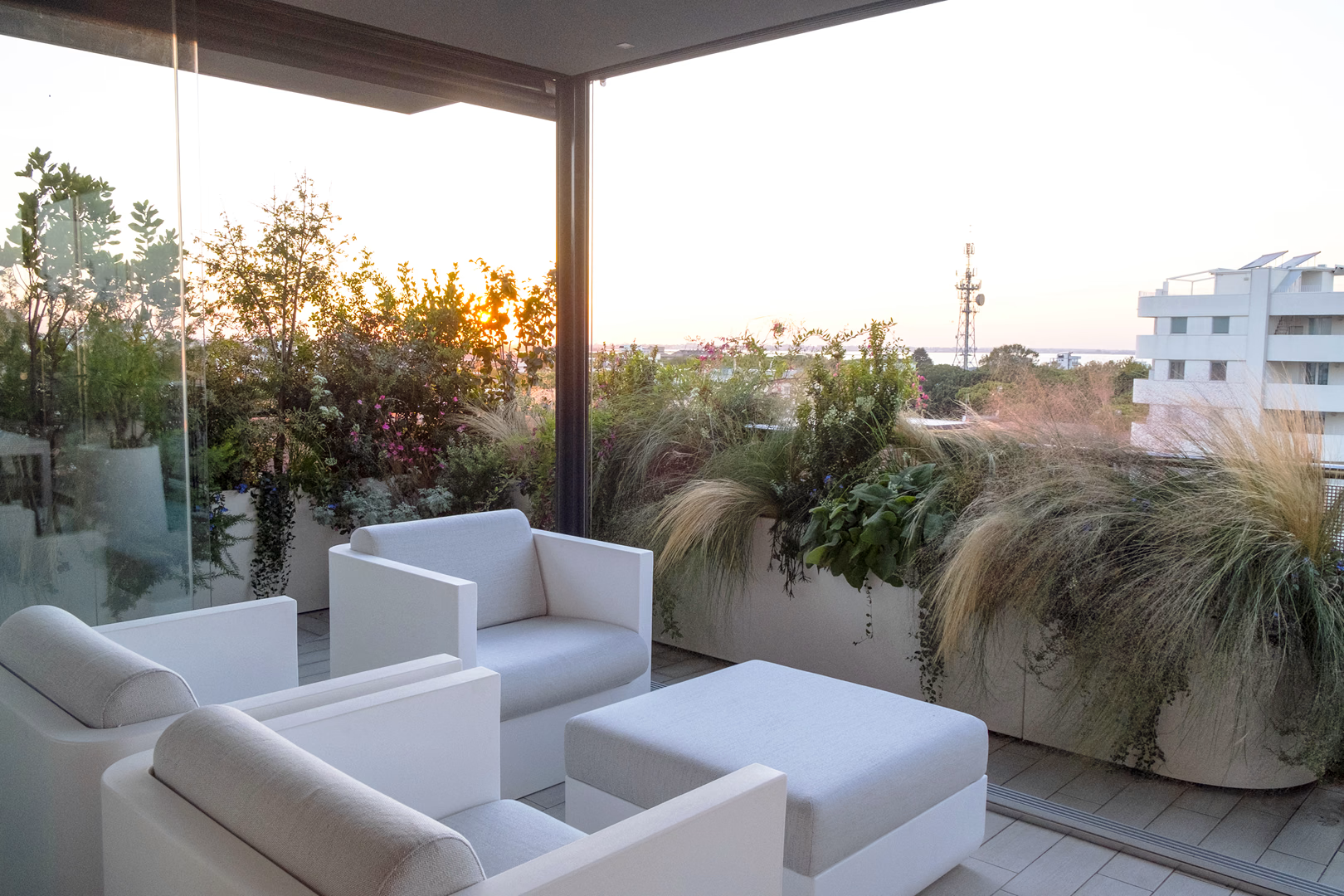
In Trieste a garden has to reckon with the bora wind, the stone of the Karst and a view of the sea that deserves to be made the most of. We design gardens and terraces tailored to the city, the coast and the Karst plateau, choosing wind-resistant plants and solutions that sit naturally in the landscape.
Book a site visitTrieste has a landscape of its own: the city runs down to the sea from the hills, the Karst plateau is made of limestone and red earth, and the bora arrives in very strong gusts, especially in winter. A garden or terrace here has to be designed, first of all, to withstand it.
That is why we choose sturdy, deep-rooted species, anchor planters and structures, and arrange the planting in layers so that the strongest plants protect the others. On slopes we work with terracing and low walls; on the Karst, with plants suited to thin, dry soils.
We follow projects in Trieste from our studio in Lignano Sabbiadoro, with site visits and our presence on site at the key stages.
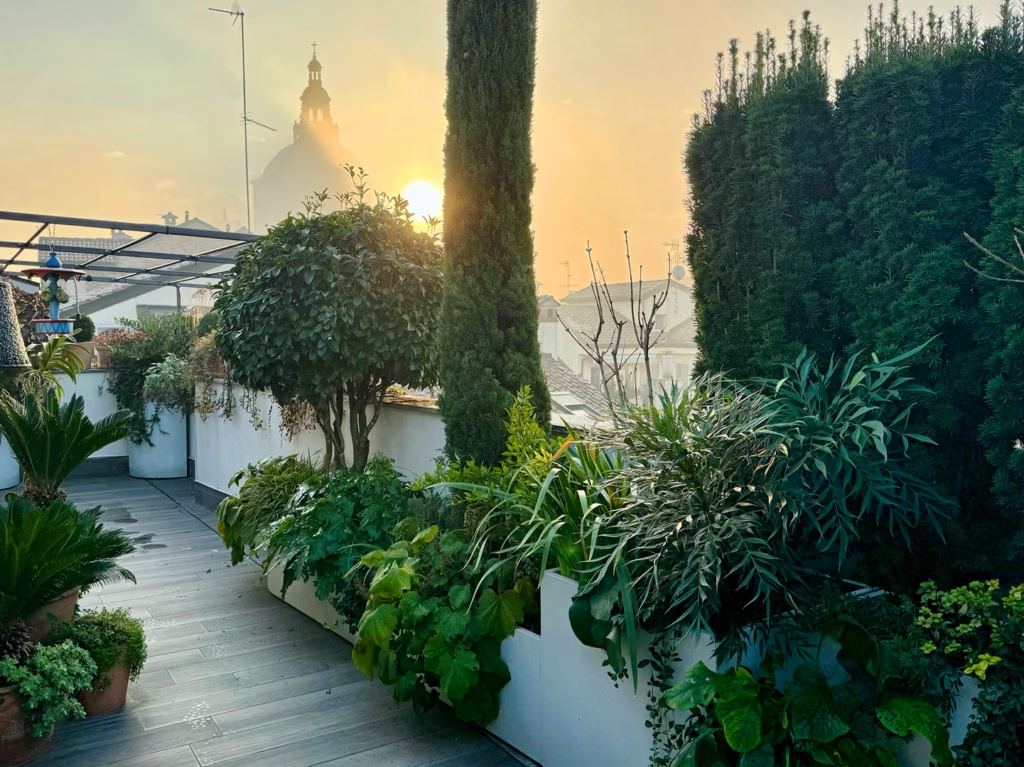
Roberto Landello is a garden designer based in Lignano Sabbiadoro. From here we design and build gardens and terraces in Trieste and on the Karst as well, following every project in person: from the first site visit and the choice of plants to construction and maintenance.
Our work starts with plants. Roberto grew up in his family’s nursery in Lignano Sabbiadoro and trained at the Scuola Agraria del Parco di Monza; Luca, our technical lead, combines a background in construction with training in agronomy and arboriculture.
We have always worked with the wind and salt of the coast: in Trieste we find them again, together with the challenge of the bora. In 2017 our installation “Ciclicità lunare” won the Foglia d’Oro del Lago di Como award at Orticolario, and our projects have been featured in Gardenia, Casa in Fiore and Terrazzi e balconi.
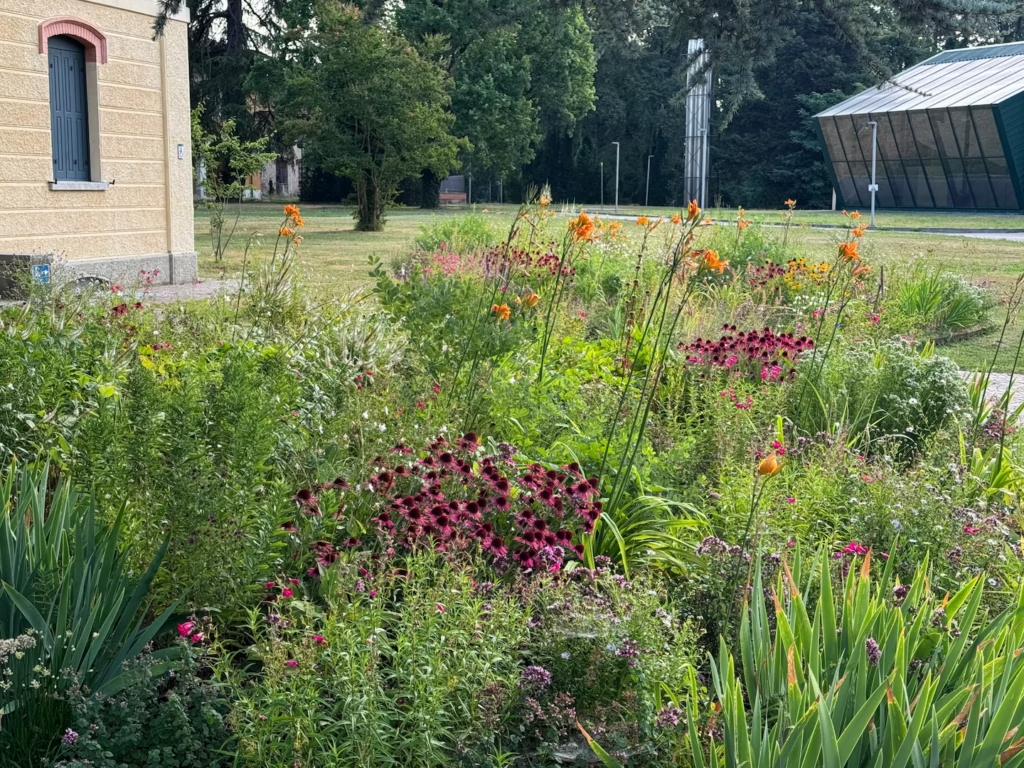
Terraces overlooking the gulf are exposed to sun and gusts. Anchored planters, sturdy species and screening designed for the bora make them usable all year round.
On the plateau the soils are thin and rocky. We choose plants suited to drought and limestone and use local stone for gardens that look as if they had always been there.
Much of Trieste is built on hillsides. We work with terracing, low walls and paths that turn a slope into a sequence of spaces to live in.
Along the coast the garden looks out to sea from an exposed position. Mediterranean and coastal species, with green shelter built up in layers, help it hold its ground.
What clients ask us most often before starting a project.
Sturdy species with small or leathery leaves and a strong root system, many of them part of the native flora of the Karst and the coast. We arrange them in layers, so the toughest protect the others.
With anchoring and weights designed for the wind, choosing stable containers and structures that are light but solid. We assess this at the site visit, together with any rules set by the building’s condominium.
Yes, with plants suited to thin, dry, calcareous soils and local stone for low walls and paths. The result is a garden that needs little water and belongs in the landscape.
Yes. With terracing, low walls and paths we turn a slope into level, usable spaces, taking care of water drainage.
Yes. Our garden design work in Trieste is run from our Lignano studio: site visit, design and our presence on site at the key stages, and we can set up a maintenance plan.
With a site visit: we look at the space and its exposure to wind and sun, listen to what you need and take measurements and photos for the preliminary design.
Have a garden or terrace in Trieste? Tell us about it: we start with a site visit.
Contact us